Generative Typography
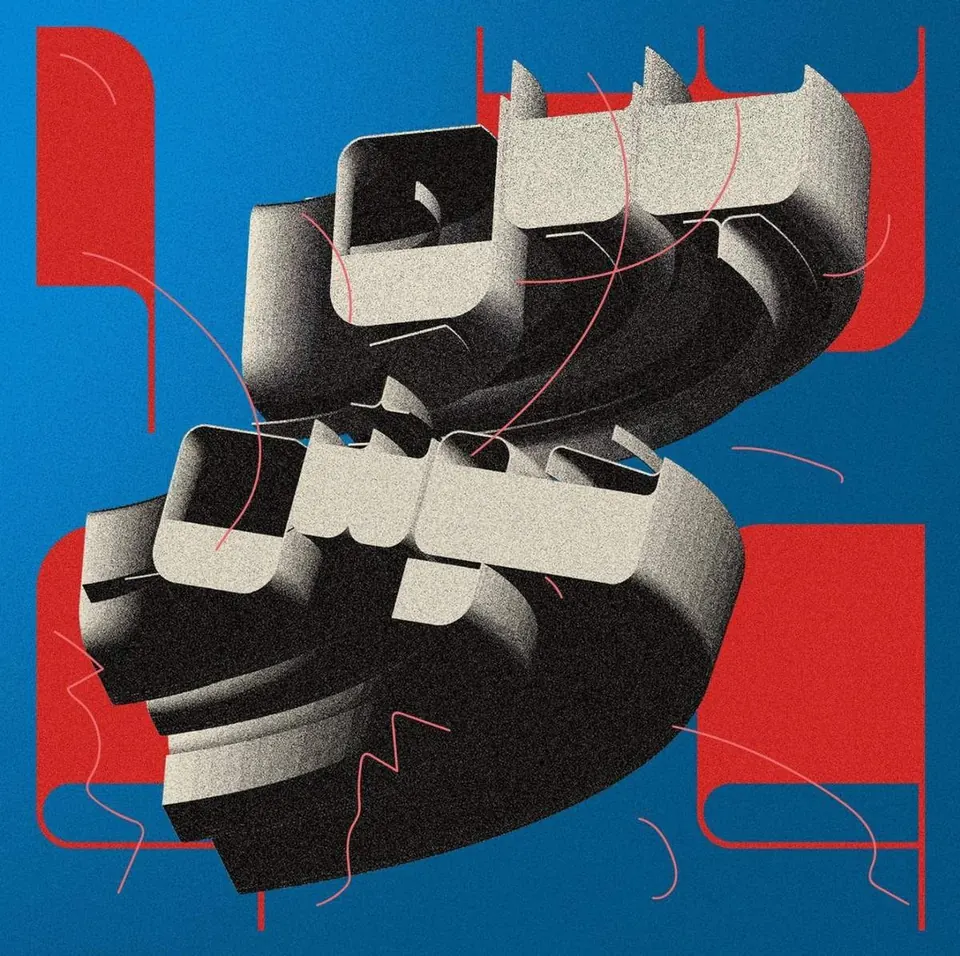
This experimental course merges graphic design with computer science. Students will move away from static fonts to create “living” letters that react to sound, data, and user input. Using coding environments like Processing and p5.js, students will program their own type tools, exploring randomness, noise, and kinetic motion to push the boundaries of legibility and expression.
§ 01 By the end you can
- Understand the logic of creative coding (Variables, Loops, Arrays)
- Manipulate font data (Bezier curves/Vector points) using code
- Create reactive type that responds to audio or mouse interaction
- Design "Variable Fonts" for responsive web environments
- Produce a series of generative posters or kinetic brand identities
§ 02 Sixteen sessions
The whole semester.
- 01Introduction to Creative Coding (Processing/p5.js)
- 02The Coordinate System & Drawing Shapes
- 03Typography in Code: Loading & Displaying
- 04Manipulating Text: Scale, Rotate, Translate
- 05The Grid: Nested Loops & Repetition
- 06Geomerative: Accessing Font Paths
- 07Interaction: Mouse & Keyboard Events
- 08 · MidtermMidterm Examination
- 09Audio-Reactive Typography
- 10Physics Libraries: Gravity & Collision
- 11Variable Fonts & CSS
- 12Particle Systems for Text
- 13Randomness vs. Perlin Noise
- 14Exporting Code to Print (High-Res PDF)
- 15Projection Mapping Type
- 16Final Project: The Generative Type Tool
Midterm around session 8. Final project briefed at session 8 or 9 and developed in stages until the juries.
§ 03 Final project
Final Project: The Generative Type Tool
Recommended reading
- Generative Design: Visualize, Program, and Create with Processing by Benedikt Gross
- Type on Screen by Ellen Lupton
- Processing: A Programming Handbook for Visual Designers by Casey Reas
- The Nature of Code by Daniel Shiffman
- Flexible Visual Systems by Martin Lorenz
More in AI & Digital Arts
| Advanced AI Techniques for Creative Practice | This capstone-level technical course is for students who have mastered basic prompting and wish to push the engine to its limits. |
| AI as Co-Creator | This course challenges the "Man vs. Machine" narrative, proposing instead a symbiotic relationship where Artificial Intelligence acts as a collaborator. |
| AI as Creative Partner | This interdisciplinary studio course reframes Artificial Intelligence from a "tool" to a "collaborator." It focuses on the psychological and workflow dynamics of working with a non-human intelligence. |
| AI, Code, & Art (AI & Art track) | Designed for the technical artist, this advanced track dives under the hood of generative tools. While other courses focus on using interface-based tools (like Midjourney), this course focuses on programming them. |
| AI, Design, and Immersive Experiences | This capstone immersive course merges Virtual Reality (VR) with Artificial Intelligence. Students will learn to create "Smart Environments"—virtual worlds populated by AI agents that can converse, navigate, and react to the user. |
| AI-Driven Fashion Design | This specialized course explores the intersection of high fashion and artificial intelligence. Students will learn to use generative tools to predict trends, design textiles, and visualize garments without the need for physical waste. |