Urdu Calligraphy & Printmaking
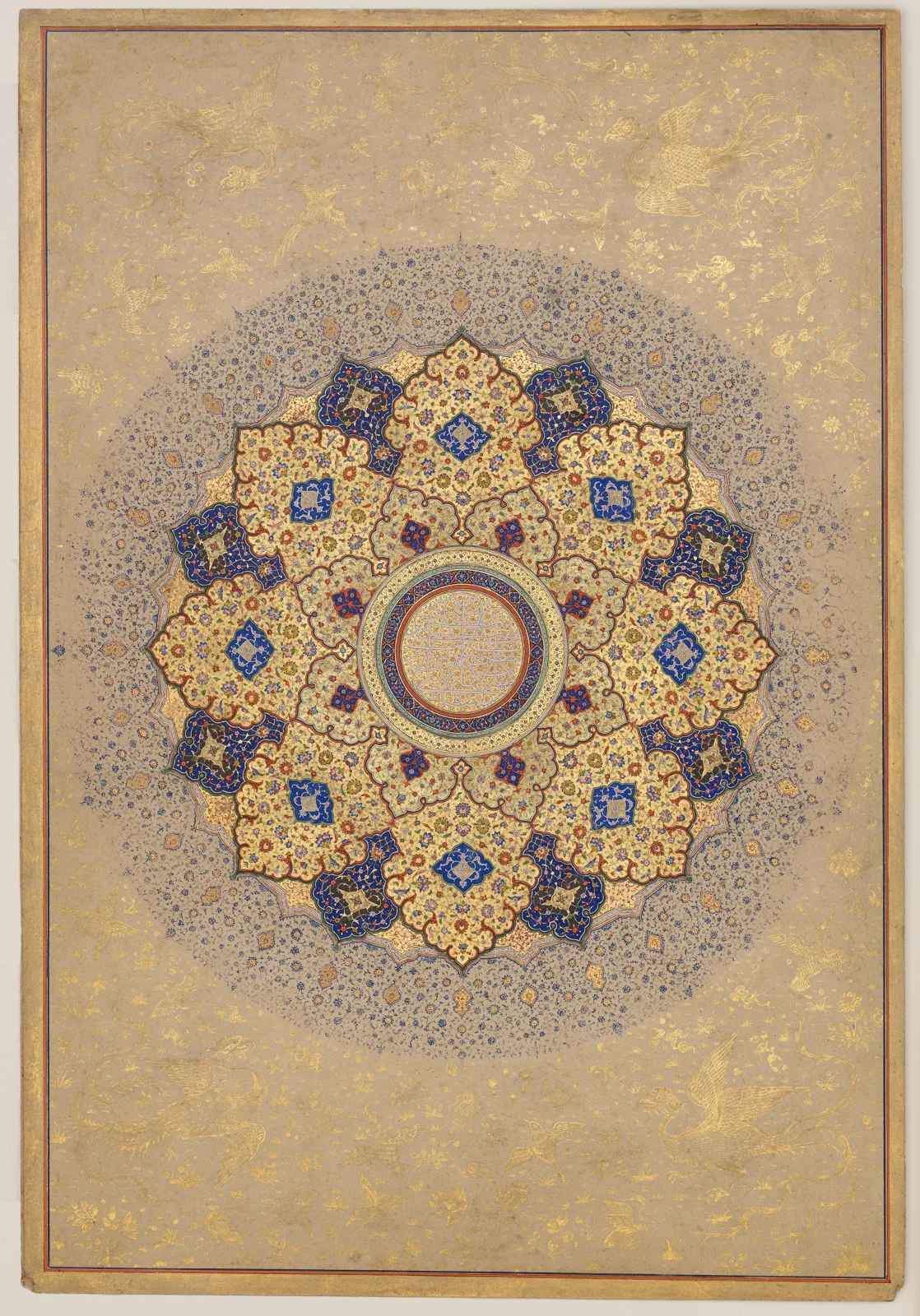
This course merges the spiritual discipline of traditional calligraphy with the reproducibility of printmaking. Students will study the rules of the Nastaliq script, mastering the bamboo Qalam and ink measurements (Nuqta). They will then translate these hand-drawn forms into print matrices—using woodblock, screen print, or lithography—to explore how classical text can be reimagined in contemporary art.
§ 01 By the end you can
- Master the anatomy of the Nastaliq script and the Nuqta measurement system
- Handle traditional tools: Bamboo Qalam, Aahar paper, and soot ink
- Translate fluid calligraphic strokes into carved blocks (Relief) or stencils (Screen)
- Explore the composition of the Sher (couplet) within a visual frame
- Create contemporary artworks that deconstruct or honor linguistic heritage
§ 02 Sixteen sessions
The whole semester.
- 01History of Islamic & South Asian Calligraphy
- 02Tools of the Trade: Cutting the Qalam
- 03The Nuqta System: Proportions & Grid
- 04Basic Letterforms: Alif to Jeem
- 05Basic Letterforms: Daal to Seen
- 06Basic Letterforms: Saad to Ain
- 07Basic Letterforms: Fay to Yay
- 08 · MidtermMidterm Examination
- 09Connecting Letters: Words & Ligatures
- 10Composition: The Kursi (Baseline)
- 11Transfer Techniques: Paper to Block
- 12Relief Printing Calligraphy (Wood/Lino)
- 13Screen Printing Calligraphy: Large Scale
- 14Calligraffiti: Modern Abstraction
- 15Gold Leaf & Illuminations in Print
- 16Final Project: The Calligraphic Print Series
Midterm around session 8. Final project briefed at session 8 or 9 and developed in stages until the juries.
§ 03 Final project
Final Project: The Calligraphic Print Series
Recommended reading
- Islamic Calligraphy by Sheila S. Blair
- The Splendour of Islamic Calligraphy by Abdelkebir Khatibi
- Nastaliq: The Calligraphers' Manual (Local/Regional resource)
- Broken Rules: Contemporary Calligraphy
- Reading Nasta’liq by Brian Spooner
More in Fine Arts
| Abstract & Impressionist Painting | This course explores Impressionist and Abstract painting traditions through color, gesture, texture, light, and expressive mark-making. |
| Advanced Cloth Figure Painting | Drawing the nude is a challenge; dressing it is an art form. This advanced course focuses on the complex relationship between the human form and drapery. |
| Advanced Figure Drawing | This course advances observational and anatomical figure drawing skills. Students study complex poses, skeletal and muscular structure, dynamic movement, foreshortening, expressive mark-making, and refined rendering to develop mastery in depicting the human form. |
| Advanced Landscape Painting | The landscape is a challenge of light, atmosphere, and vastness. This advanced course moves beyond the "Blue Sky, Green Grass" formula. |
| Advanced Materials | In the world of 3D, a model is only as good as its surface. This course explores "Look Development" (LookDev) and the creation of photorealistic digital materials. |
| Advanced Mold Making Techniques | This technical course is the bridge between a unique sculpture and mass production. Students will explore the science of replication, learning to create complex molds for sculpture, product design, and prototyping. |